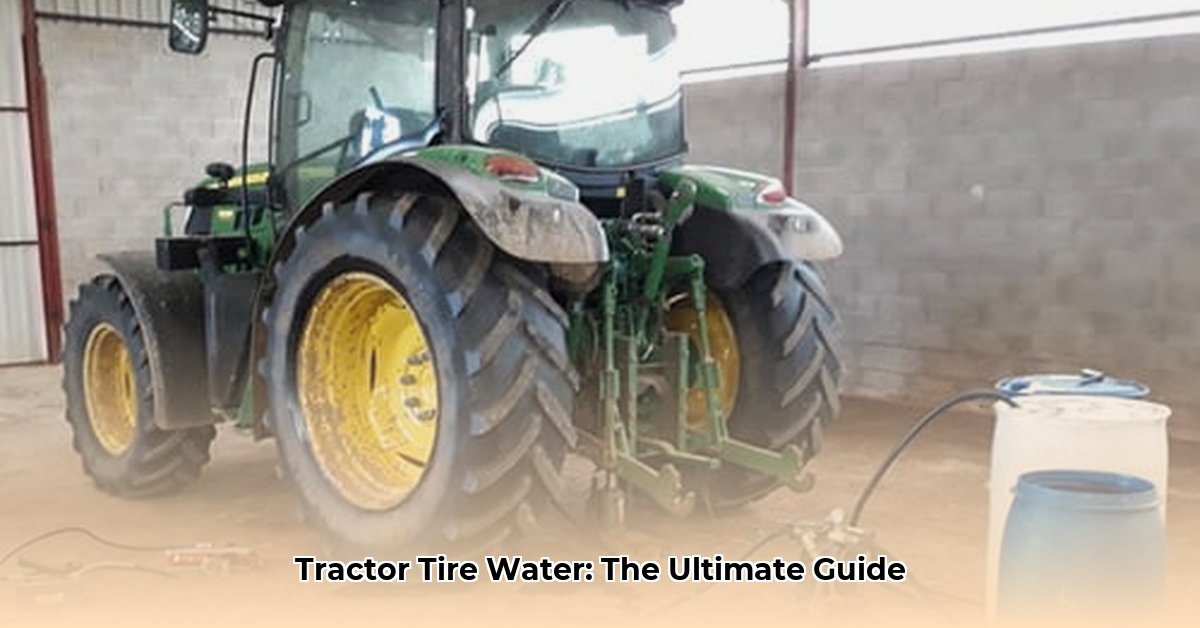
Adding weight to your tractor tires, a process called ballasting, significantly improves traction and stability, especially in challenging field conditions like slopes or mud. This guide provides a step-by-step walkthrough of filling tractor tires with water and a comparative analysis of various ballasting options to help you choose the best solution for your farm. For more information on tractor tire maintenance, see John Deere tire info.
How to Fill a Tractor Tire with Water: A Step-by-Step Guide
Safety First! Always consult your tractor's owner's manual before beginning any maintenance procedure. Improper ballasting can damage your tires.
Gather Supplies: You'll need a clean water source (hose), a hose nozzle (with adjustable flow), a tire pressure gauge, a valve core remover tool, and safety glasses. Choose a level work area to prevent tractor tipping.
Inspect the Tire: Carefully examine the tire for any cuts, cracks, or bulges. Never add ballast to a damaged tire.
Remove the Valve Core: Using the valve core remover, carefully remove the tiny valve core from the tire's valve stem. This allows air to escape as you add water, preventing dangerous pressure buildup.
Add Water Slowly: Connect your hose and begin adding water slowly and steadily. Avoid rapidly filling the tire, as this can cause damage. Maintain sufficient air space within the tire to accommodate water expansion due to temperature changes.
Monitor Water Level: Observe the water level as it rises. Leave adequate space for air expansion. Overfilling is risky and could lead to tire damage.
Replace Valve Core: Once you've added the desired amount of water, carefully reinsert the valve core.
Check Tire Pressure: Use your pressure gauge to check the tire pressure. Add air as needed to reach the manufacturer's recommended pressure for your tire and the amount of water added. This information is usually found in your tractor's manual or on the tire sidewall.
Ballasting Options: A Comparative Analysis
Water is a convenient and inexpensive ballast, but it's not the only option. Several other materials offer distinct advantages and disadvantages:
| Ballast Type | Advantages | Disadvantages | Typical Cost | Environmental Impact | Best Suited For |
|---|---|---|---|---|---|
| Water | Cheap, readily available, easy to remove | Freezes in cold weather, promotes rust | Very Low | Generally Low | Mild Climates |
| Antifreeze | Lower freezing point than water | Toxic, harmful if spilled, can damage tire over time | Low to Moderate | Potentially Moderate | Cold Climates (with caution) |
| Calcium Chloride | Very low freezing point, dense | Corrosive, can increase soil salinity | Moderate | Potentially Moderate | Cold Climates (with caution) |
| Polyurethane Foam | Permanent, doesn't freeze, prevents leaks | Most expensive, often requires professional installation | High | Generally Low | All Climates |
Choosing the right ballast depends on several factors: budget, climate, and the duration of use. Water is suitable for temporary ballasting in warmer climates. For permanent solutions or cold climates, consider polyurethane foam or antifreeze (with awareness of the environmental and health implications). Calcium chloride provides good cold weather protection but should be used cautiously due to its corrosive nature.
"Selecting the appropriate ballast is a crucial aspect of tractor tire management," says Dr. Emily Carter, Agricultural Engineering Professor at State University. "Failure to consider the long-term implications of your choice can lead to reduced tire lifespan and environmental concerns."
Key Considerations for Choosing the Best Ballast
Regardless of your chosen ballast, regular tire pressure checks are crucial for optimal performance, fuel efficiency, and tire longevity. Ignoring this simple step can lead to significant problems. Water ballasting requires particular attention to avoid freezing issues in colder climates. The cost and environmental impact of each option should also factor into your final decision.
Remember to always prioritize safety. Improper ballasting techniques can lead to serious damage to your equipment and potential injury. Always follow the manufacturer's recommendations, and don't hesitate to consult with a qualified mechanic if you have any questions.